 bitcoinmix
How to Trade Memecoins Anonymously on Ethereum, BNB Chain and Solana
Memecoin wallets are the most watched in crypto. Learn how traders get exposed, the burner rotation method that keeps trades apart from your name, plus the chain-specific traps on Ethereum, BNB Chain and Solana.
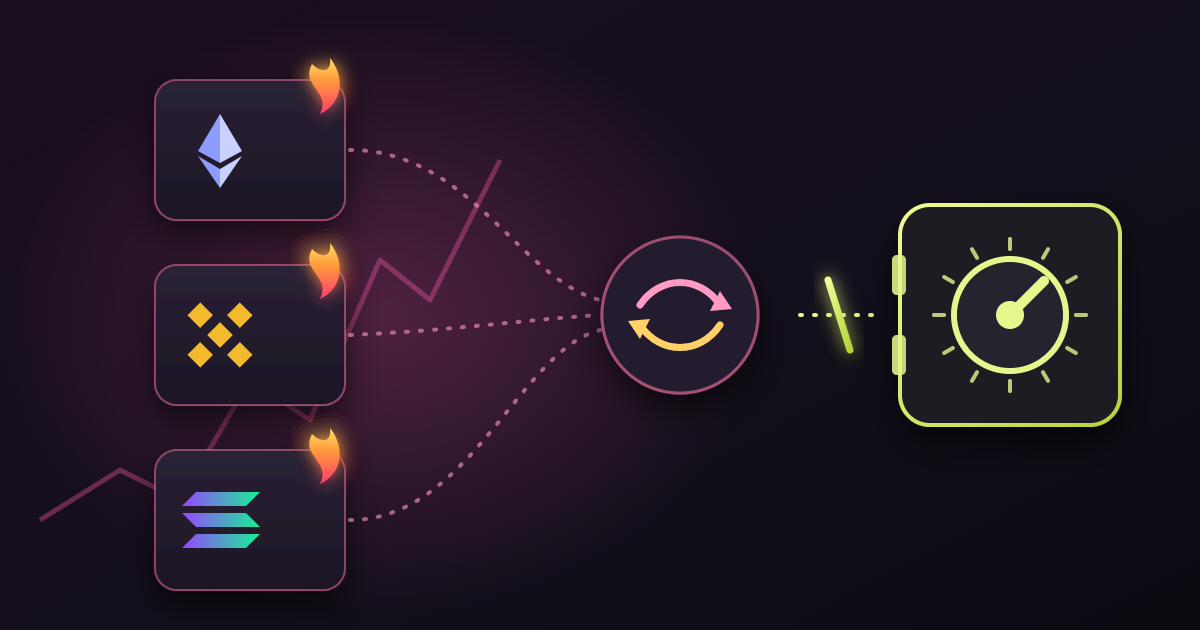
To trade memecoins anonymously, never trade from a wallet that can be traced to your name. Fund a fresh burner wallet through a mixer. Trade with it for one run. Then send the profits back through the mixer into a separate vault wallet. The same rule works on Ethereum, BNB Chain and Solana. Each chain, however, has its own traps, covered below.
Memecoin trading is the most public activity in crypto. Every buy, every sell and every profit sits on-chain for anyone to study. This guide shows how wallets get exposed, then lays out a setup that keeps your trades separate from your identity.
Why Memecoin Wallets Are the Most Watched in Crypto
On a memecoin chart, the wallets matter as much as the price. A whole industry of wallet trackers now ranks traders by profit, labels them as "smart money" and sends alerts the moment they buy. Copy-trading tools then mirror those wallets automatically.
That has two effects. First, a successful wallet attracts followers who buy right behind it, which eats into its edge. Second, a wallet that is ever linked to a real person exposes that person's entire trading record: every win, every loss and the total size of the account.
The stakes are real because the money is real. On one major Solana launchpad, the share of profitable wallets bottomed at 30.1% in June 2025. By April 2026 it had risen to 73.3%, based on realized gains, according to CoinGecko Research. Profitable wallets are exactly the ones people try to identify.
Five Ways a Memecoin Wallet Gets Linked to You
Most traders do not get exposed by clever analysis. They expose themselves. The table lists the usual causes.
| Link | How It Happens | How to Avoid It |
|---|---|---|
| Exchange funding | The burner receives its first coins straight from a verified exchange account | Fund it through a mixer instead |
| Profit withdrawals | Gains go straight back to the same exchange account | Send profits through a mixer to a vault, then decide |
| Address reuse across chains | One EVM key trades on both Ethereum and BNB Chain, showing the same address on each | Create separate keys per chain |
| Screenshots and posts | A shared PnL card or chart reveals a transaction or wallet | Crop out addresses and avoid exact numbers |
| Trading bot accounts | A bot tied to a phone-number account holds the trading wallet | Keep bot wallets small; treat them as public |
The Burner Rotation Method
Instead of one trading wallet that grows a history over months, rotate through short-lived burners. Each run follows the same four stages.
- Fund. Send coins from your vault or exchange through a mixer. Pick a new burner address as the destination. Include enough for gas and your trading budget.
- Trade. Use the burner for one run, such as one launch, one theme or one week. Do not connect it to anything else you use.
- Rotate. When the run ends, stop using that burner. A new run gets a new address with no shared history.
- Exit. Send the burner's balance through a mixer into your vault wallet. Never send it directly.
The vault never touches a trading app. Its only job is to hold what you keep. As a result, if any burner ever gets labeled or linked to you, the trail stops at the mixer instead of reaching your savings.
Rotation also protects your edge. Copy-traders follow addresses, not people. A wallet that disappears after a good run leaves nothing to follow.
Chain by Chain: What Changes on Ethereum, BNB Chain and Solana
The method stays the same everywhere. The details differ.
Ethereum
Every burner needs ETH for gas before it can buy anything. Topping it up from a known wallet links the two instantly, so fund gas through the mixer together with the trading budget.
Ethereum also has the busiest sandwich bots. These bots buy just before your trade, then sell right after it, pocketing the difference. An analysis of EigenPhi data estimates that sandwich attacks cost traders about $60 million a year. One bot was behind roughly 70% of them, Cointelegraph reported. Low slippage settings and a private transaction route reduce the damage. Use the Ethereum mixer to fund Ethereum burners.
BNB Chain
BNB Chain uses the same address format as Ethereum. One private key therefore produces the same address on both networks. Anyone can see that the Ethereum trader and the BNB Chain trader are the same wallet. Create separate keys for each chain, even when one wallet app manages both.
Gas on BNB Chain is cheap, but it still has to come from somewhere. Fund each burner with BNB through the BNB mixer rather than from an exchange withdrawal.
Solana
Solana memecoins move fastest, often on launchpads where a token can start trading minutes after creation. Each new token also creates a token account that needs a small rent payment in SOL. So a burner has to hold enough SOL for fees and rent across every token it touches.
Two Solana details link wallets quietly. A transaction can name a different wallet as the fee payer. Closing token accounts returns rent to whatever address the closing transaction names. Make sure neither ever points at your vault. Fund Solana burners through the Solana mixer.
Trading Bots and Terminals: Speed Versus Exposure
Many memecoin traders use Telegram bots or web trading terminals. They are fast. However, they change the privacy picture.
The bot holds the wallet. Most Telegram bots create a wallet for you, then keep the key on their servers so they can trade instantly. That is convenient, but it puts your funds in someone else's hands. In September 2024, users of one popular bot, Banana Gun, saw nearly $2 million in ETH drained from bot-controlled wallets, Cointelegraph reported.
Your account is not anonymous. A Telegram account is usually tied to a phone number. Web terminals see your IP address and every wallet you connect. Any of these records can leak later.
Practical rules:
- Treat every bot or terminal wallet as a public burner, never as storage.
- Keep only the current run's budget in it.
- Move profits out often, through a mixer, into your vault.
- Never connect your vault to a trading terminal.
Taking Profits Without a Trail Back to You
The exit is where most traders give themselves away. After a good run, the natural move is to send everything straight to an exchange. That single transfer connects the whole run to a verified account.
Instead, send the burner's balance through a mixer into your vault. From there, you decide what to do next. Cashing out later from the vault still creates a record, but that record no longer shows which memecoins you traded or how you made the money.
Frequently Asked Questions
Can Memecoin Trades Be Traced?
Yes. Every trade on Ethereum, BNB Chain and Solana is public. Wallet trackers index them within seconds. What can be hidden is the link between a trading wallet and you.
How Do Copy-Traders Find My Wallet?
They scan for wallets with a high win rate or large profits, often through trackers that rank wallets automatically. Once a wallet is on a list, every new buy triggers alerts for its followers.
Is It Safe to Use a Telegram Trading Bot?
It is convenient but risky. The bot usually controls the wallet key. Keep only the current trading budget in it, then move profits out regularly.
Should I Use One Wallet for Ethereum and BNB Chain?
No. One key produces the same address on both networks, which links the activity. Use separate keys for each chain.
Does a VPN Make Memecoin Trading Anonymous?
A VPN hides your IP address from websites and bots. It does nothing about on-chain links. A wallet funded from your exchange account is still linked to you, VPN or not.
How Should I Fund a New Burner Wallet?
Send coins through a mixer with the burner as the destination. Include gas and the trading budget in one go, so the burner never needs a top-up from a known wallet.