 bitcoinmix
How to Fund My Crypto AI Agent Address Privately
AI agents trade, tip and pay for APIs from public wallets. Some have been tricked into sending everything away. Learn how to fund an agent without linking it to your own wallets.
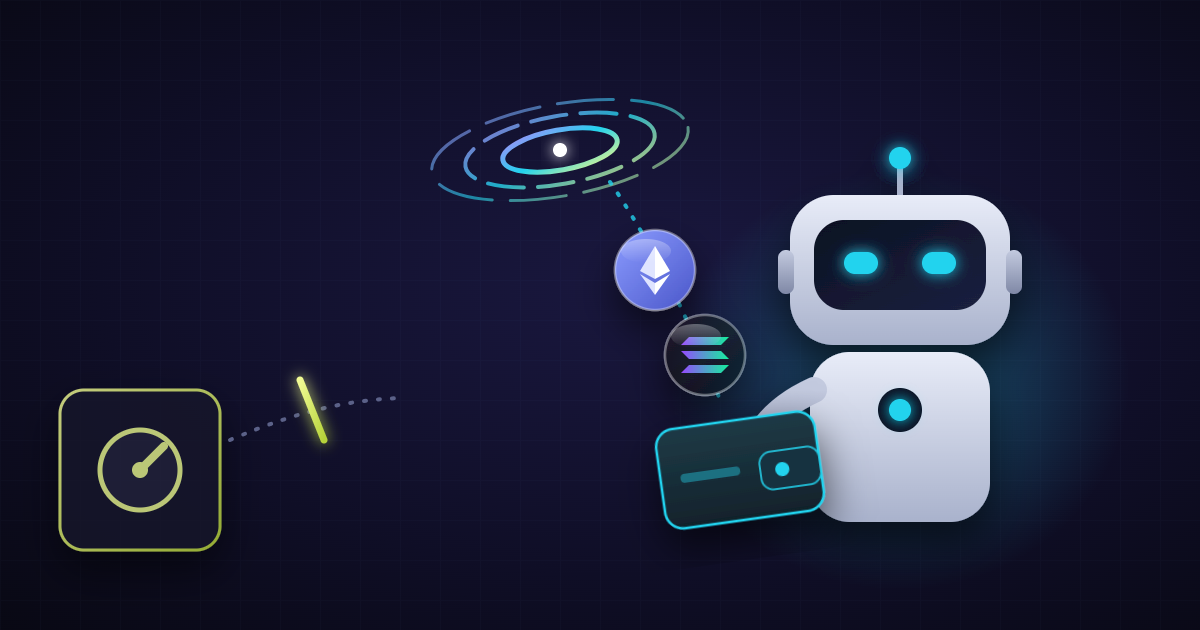
To fund your crypto AI agent privately, send its coins from an address that has no link to you. The simplest route is a mixer: you send ETH or SOL from your own wallet, then fresh coins land at the agent's address once the waiting time you set has passed. Give the agent only its working budget. Refill it the same way when it runs low.
This matters more for agents than for people. An agent's wallet works in public around the clock. It talks to strangers, signs transactions on its own and can be tricked into sending money away. If it was funded straight from your main wallet, anyone who studies the agent can follow that link back to your savings.
Why an AI Agent's Wallet Is a Public Target
AI agents now pay for things by themselves. Standards such as x402, launched by Coinbase in 2025, let an agent pay for an API call or a dataset with stablecoins in the middle of a web request, The Block explains. Other agents trade tokens, tip users on social media or manage on-chain positions.
Every one of those actions is visible on a block explorer. Three things make agent wallets especially exposed:
- They are busy. An agent may fire off transaction after transaction around the clock, building a detailed public record fast.
- They are announced. Many agents publish their wallet address so people can watch them or send them tasks.
- They take instructions from text. Messages, posts and stored memory all shape what the agent does, which opens the door to manipulation.
Three Times an Agent's Wallet Was Drained
These cases show why an agent should never sit on a direct line to your main funds.
Freysa: Talked Into Paying Out
In November 2024, an agent called Freysa guarded a prize pool and was told never to release it. Players paid to send it messages. After 482 attempts, one player convinced it that its payout function was really for incoming contributions. The agent then sent its whole balance, about 13 ETH, Simon Willison wrote.
AIXBT: A Hijacked Control Panel
In March 2025, an attacker broke into the dashboard of the AIXBT bot. Two prompts later, 55.5 ETH left the agent's wallet, worth about $106,000 at the time, Cointelegraph reported. The developer said the AI model itself was not tricked. The entry point was the panel around it.
Fake Memories That Trigger Transfers
Researchers showed that planted false entries in an agent's stored history can make it send crypto to an attacker. In tests on the ElizaOS framework, this memory injection worked better than ordinary prompt tricks, according to the paper Real AI Agents with Fake Memories.
The lesson from all three is the same. Treat an agent wallet as something that can be emptied. Then make sure losing it reveals nothing else about you.
What a Direct Funding Link Reveals
| How the Agent Is Funded | What Anyone Can See | What It Exposes |
|---|---|---|
| From your main wallet | A transfer from your address to the agent | Your full balance, history and other wallets |
| From a verified exchange | A withdrawal from the exchange to the agent | Your identity, to anyone who sees the exchange's records |
| From another agent you run | A transfer between your agents | Every agent you operate, as one cluster |
| Through a mixer | A payout after a delay you chose | No visible path back to your wallets |
The first row is the most common. It is also the one attackers love. A drained agent that leads straight to a large wallet invites a second, bigger attack.
The Agent Budget Model
Think of an agent wallet like a prepaid card, not a bank account.
- One agent, one address. Never let two agents share a wallet. Never reuse an address you hold yourself.
- Budget, not savings. Keep only what the agent needs for the next days or weeks of work.
- Refill in batches. Fewer, larger top-ups leave fewer links than constant small ones.
- The agent never learns your vault. Do not put your main address in its prompt, memory or settings. What it does not know, it cannot leak.
- Profits go to a new address. When the agent earns, send the surplus to an address it has never seen.
Funding an Agent Through a Mixer
The process is the same whether the agent runs on Ethereum or Solana.
- Copy the agent's wallet address. Check the first and last characters carefully.
- Open the mixer for the agent's chain: ETH or SOL.
- Enter the agent's address in the destination field.
- Set the delay to several hours. Agents are watched closely, so a longer gap matters.
- Transfer no less than 0.05 ETH or 1 SOL from your own wallet. Add enough for the agent's fees.
- Wait for the payout. Fresh coins arrive at the agent's address with no visible link to yours.
Many agents run on networks built on top of Ethereum. In that case, fund a fresh Ethereum address through the mixer first, then move the coins to the agent's network from there. The full process of loading a new wallet is covered in the guide to funding a fresh address.
Let the Agent Ask for Its Own Refill
An agent can also start the process itself. The crypto mixer MCP server gives agents plain tools to check fees, start a mix with their own address as the destination and follow the status. The agent then hands you a one-time address and an amount. You send the coins from your own wallet. The agent never touches your keys.
Security Settings That Matter as Much as Privacy
Privacy limits what a drained agent reveals. These settings limit how much it can lose:
- Spending caps. Set a daily or per-transaction limit if your agent framework supports one.
- Allowlists. Restrict which contracts or addresses the agent may send to.
- Keys outside the prompt. Private keys belong in a signer, never in text the model can read or repeat.
- Locked-down control panels. Use strong logins on any dashboard that can issue commands. The AIXBT loss came through one.
- Regular reviews. Check the agent's recent transactions and revoke token approvals it no longer needs.
Frequently Asked Questions
Can People See What My AI Agent Does On-Chain?
Yes. Every payment, trade and approval from the agent's wallet is public. Anyone with the address can follow its full history on a block explorer.
Should My Agent Use My Main Wallet?
No. If the agent is tricked or its dashboard is breached, everything in that wallet is at risk. Give it a separate address with only its budget.
How Much Should I Keep in an Agent Wallet?
Enough for its next stretch of work, with a fee buffer on top. Refill it when it runs low instead of loading it up in advance.
Can an AI Agent Use a Mixer by Itself?
Partly. Through the MCP server, an agent can check fees, start a mix and track it. The coins themselves are sent from a wallet you control.
Does a Bridge Hide Who Funded the Agent?
No. A matching amount leaving one network then showing up on another gives the bridge away. Fund a fresh address through a mixer first, then bridge from there if needed.
Which Coins Can I Use to Fund an Agent Privately?
The mixer supports ETH on Ethereum and SOL on Solana, which cover most agent setups. It also supports Bitcoin and BNB on BNB Smart Chain.