 bitcoinmix
Can Crypto Payments Be Traced? Bitcoin, Ethereum and Solana Explained
Every Bitcoin, Ethereum and Solana payment sits on a public ledger. Follow one payment through a real trace, compare the three chains, then see the points where tracing finally runs out of links.
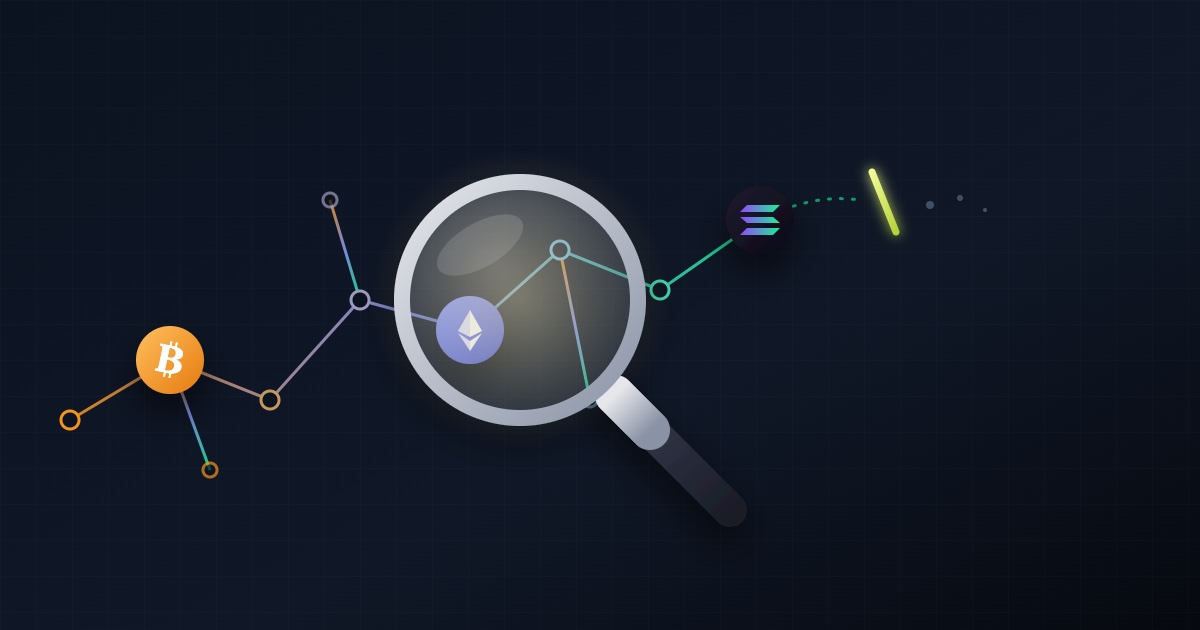
Yes, crypto payments can be traced on Bitcoin, Ethereum and Solana. Every payment is written to a public blockchain that anyone can read, forever. What a trace cannot do on its own is put a name on an address. That name comes from somewhere else: an exchange account, a shop's records, a public post or a mistake.
So the real question is not whether crypto can be traced. It is how far a trace can get before it hits a dead end. This guide follows one payment step by step, compares the three chains, then shows where a trace actually stops.
Anatomy of a Trace: Following One Payment
Imagine someone pays 0.01 BTC for an online service. Here is what an outside observer can do with nothing but a block explorer.
- Find the transaction. The service publishes its payment address, or the buyer shares a receipt. The transaction is now located.
- Look backwards. The inputs show which earlier transactions funded the payment. Each of those has its own inputs. The chain of sources keeps going back.
- Group the addresses. Addresses spent together in one transaction usually belong to the same wallet. Grouping them reveals far more of the buyer's balance than one address shows.
- Spot the change. Most payments send leftover coins back to the buyer. Analysts look for the output that behaves like change, then follow it to the buyer's next payment.
- Hit a labeled address. Sooner or later the trail touches an exchange, a merchant or a service with a known name. That is where an address becomes a person.
Steps 1 to 4 need no special access. Step 5 needs records that someone else holds.
What an Observer Sees on Each Chain
| Bitcoin | Ethereum | Solana | |
|---|---|---|---|
| How funds are held | Separate coins, called UTXOs | One account per address | One account per address with separate token accounts |
| What one address reveals | Only the coins sent to that address | The full balance and history of the account | The full balance, every token held and its history |
| Main tracing shortcut | Grouping inputs and change detection | Reused addresses and gas funding | Token accounts and fee payers |
| Extra clues | Fee rates and wallet habits | Names, NFTs and app approvals | Memos and rent refunds |
| Typical trace effort | Moderate | Low | Low |
Bitcoin's coin model gives users more room to separate payments. Ethereum and Solana keep everything under one address, so one known address usually exposes much more. Chain-specific habits are covered separately for Ethereum and Solana.
Three Cases That Show How Far Tracing Goes
Researchers Shrank 12 Million Addresses to 4 Million
Back in 2013, researchers at UC San Diego tested how much grouping reveals. By treating inputs spent together as one owner, they cut more than 12 million Bitcoin addresses down to roughly four million clusters, Bitcoin Magazine recounted. They checked their results by making real purchases from known services. Today's commercial tools build on the same idea.
A Ransom Followed Across Addresses
In 2021, Colonial Pipeline paid a ransom of 75 BTC. Investigators followed the coins as they moved across several addresses. They later recovered 63.7 BTC, The Record reported. The trace identified where the coins sat. Recovering them still required access to a private key.
Coins Moved Years After a Hack
The 2016 hack of the Bitfinex exchange took about 119,754 BTC. Almost six years later, investigators seized around 94,000 of those coins, worth about $3.6 billion at the time, Decrypt reported. Time alone did not erase the trail.
The common thread: a blockchain never forgets. A trace can start years after the payment.
Who Actually Traces Crypto Payments
Tracing is not a single group's job. Several kinds of observers do it, each with different reach:
- Anyone with a block explorer. Free tools show every transaction, balance and link between addresses.
- Blockchain analytics firms. They group millions of addresses into clusters, then label clusters as exchanges, merchants or services.
- Exchange compliance teams. They screen incoming coins against those labels before crediting an account.
- Researchers and journalists. They follow high-profile wallets, from hacks to whales on prediction markets.
- Scammers and stalkers. They use the same free tools to find wallets worth targeting.
The first and last groups need no permission at all. That is the part most people forget.
Myths vs Facts About Crypto Tracing
| Myth | Fact |
|---|---|
| A new address makes me anonymous | Only until it receives coins from an address linked to you |
| Tracing needs special access | Most of it works with a free block explorer |
| Old transactions are safe | The record is permanent; tracing can start at any time |
| Solana is too fast to follow | Indexers record every block within seconds |
| Small payments go unnoticed | Small payments carry the same links as large ones |
| A VPN hides my payments | A VPN masks where you connect from, not the links on-chain |
Where a Trace Actually Stops
A trace follows links. It stops where the links stop. In practice, that happens in three places:
- A fresh address funded without a visible source link. If nothing on-chain connects the funding to you, there is nothing to follow back.
- A long time gap with no matching amounts. Pairing a payout with a payment gets much harder when timing and sums do not line up.
- A mixer between two wallets. Coins go in from one address. Fresh coins come out to another after a delay you choose. The blockchain shows no direct path between the two.
That is why separating wallets matters more than any single trick. Starting a wallet with zero history is covered in this funding walkthrough.
How Traceable Is Your Own Payment? A Quick Check
Answer these about the wallet you pay from:
- Did its coins come straight from a verified exchange? If yes, the exchange can link it to you.
- Have you ever shared this address publicly? A post, invoice or donation page ties it to a name.
- Does it hold a readable name or NFTs? Those act as permanent labels.
- Has it ever sent coins to your other wallets? Then they are one cluster.
- Do you reuse it for many payments? Every reuse adds to one public history.
Each "yes" is a link a trace can follow. Each "no" is a dead end.
Related Guides
- How to Use Bitcoin Anonymously
- KYC Data Leaks Put Crypto Holders at Risk: How to Keep Bitcoin Private
Frequently Asked Questions
Can Bitcoin Payments Be Traced?
They can. Every Bitcoin transaction is public. Analysts group addresses and follow change outputs. A name appears once the trail reaches a service that knows the owner.
Can Ethereum Transactions Be Traced?
Yes, usually more easily than Bitcoin. One Ethereum address holds the whole balance and history, so a single known address reveals a lot.
Can Solana Transactions Be Traced?
They can. Solana's speed does not hide anything. Token accounts point to their owner. Every transaction is indexed almost instantly.
Does Deleting a Wallet App Remove the History?
No. The history lives on the blockchain, not in the app. Deleting the app changes nothing about what others can see.
What Is the Best Way to Make a Payment Harder to Trace?
Pay from an address that nothing on-chain connects to your identity or your other wallets. Funding that address through a mixer removes the on-chain path back to you.